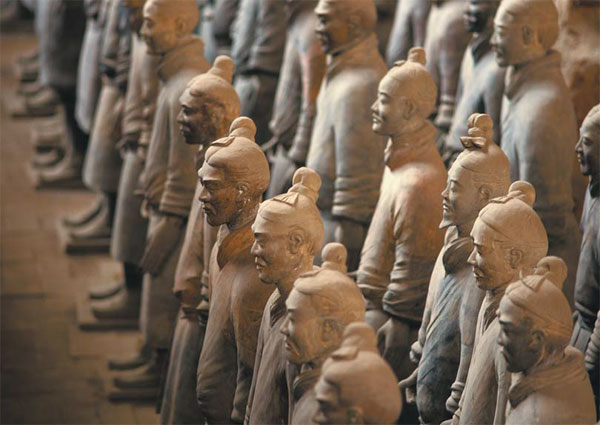
Terracotta Warriors
Introduction
The Terracotta Warriors are a world-renowned archaeological discovery located in Xi'an, Shaanxi province, China. These life-sized figures, numbering over 8,000, were commissioned by Emperor Qinshihuang, the first emperor of the Qin Dynasty (221-206 BC), to accompany him in the afterlife. The warriors symbolize the emperor's military power and serve as a testament to the advanced craftsmanship and organizational capabilities of ancient China. Discovered in 1974 by local farmers, the Terracotta Army is considered one of the greatest archaeological finds of the 20th century and has been designated as a UNESCO World Heritage Site since 1987. The site includes multiple pits containing soldiers, horses, chariots, and other artifacts, all meticulously crafted to recreate the powerful Qin army.
Discovery
The discovery of the Terracotta Warriors in 1974 marked a turning point in archaeological history. Local farmers in Xi'an's Lintong district stumbled upon fragments of pottery while digging a well. Subsequent excavations revealed an underground army of life-sized terracotta figures buried in pits near the mausoleum of Emperor Qinshihuang. The first pit, known as Pit No. 1, spans over 14,260 square meters and contains more than 6,000 warriors and horses arranged in battle formation. Additional pits, including Pit No. 2 and Pit No. 3, were later uncovered, revealing specialized units such as cavalry, infantry, and command figures.
The figures were crafted to represent real soldiers, with unique facial features and expressions. Alongside the warriors, archaeologists unearthed numerous bronze weapons, chariots, and other artifacts, showcasing the military sophistication of the Qin Dynasty. The discovery has since led to three major excavation phases, with ongoing research and restoration efforts aimed at preserving the site and uncovering its secrets.
Construction and Design
Materials and Techniques
The creation of the Terracotta Warriors involved advanced materials and techniques that highlight the ingenuity of Qin artisans. The figures were made from clay sourced locally in Shaanxi province, and each warrior was constructed in parts, including the head, arms, legs, and torso. These components were assembled and fired in kilns to achieve durability. The artisans employed a "multichannel supply" model, with different workshops specializing in specific parts of the figures. Research has revealed inscriptions such as "Gong" and "Xianyang" on the statues, indicating the involvement of palace craftsmen and local artisans.
Portable X-ray fluorescence spectrometry and geochemical analyses have shown that components for each body part of the same warrior were similar, while variations existed between different figures. This suggests modular production methods combined with individual customization. The warriors were originally painted in vibrant colors, including red, green, and blue, although much of the paint has faded over time due to exposure to air and humidity.
Types of Figures
The Terracotta Army comprises various types of figures, each serving a specific role within the recreated military formation. These include:
-
Infantry Soldiers: Representing the bulk of the army, these figures are depicted in standing positions, armed with spears, swords, and shields.
-
Cavalry: Mounted warriors alongside their horses, showcasing the mobility and strength of the Qin army.
-
Charioteers: Positioned in chariots, these figures symbolize the strategic use of vehicles in warfare.
-
Commanders: Distinguished by their elaborate armor and headgear, these figures represent high-ranking officers.
-
Specialized Units: Figures such as acrobats and musicians have also been discovered, indicating the presence of ceremonial and entertainment roles within the army.
Each figure is unique, with detailed facial features, hairstyles, and attire that reflect the diversity of the Qin military.
Historical and Cultural Significance
Historical Context
The Terracotta Warriors provide invaluable insights into the political, military, and cultural landscape of the Qin Dynasty. Emperor Qinshihuang unified China for the first time, establishing centralized governance, standardizing measurements, and constructing monumental projects such as the Great Wall of China. The Terracotta Army reflects the emperor's ambition to maintain his power and influence in the afterlife, as well as his belief in immortality.
The warriors also demonstrate the advanced organizational capabilities of the Qin state, which employed thousands of artisans and laborers to complete the massive project. The presence of inscriptions and fingerprints on the figures further highlights the collaborative effort and craftsmanship involved.
Cultural Legacy
The Terracotta Warriors have become a symbol of China's rich cultural heritage and artistic achievements. Their discovery has sparked global interest in ancient Chinese civilization, leading to numerous exhibitions and research initiatives. The figures have been displayed in museums worldwide, fostering cultural exchange and mutual understanding.
The site continues to inspire modern works, such as dance dramas and virtual exhibitions, that reinterpret the legacy of the Qin Dynasty. The warriors also serve as a reminder of the importance of preserving cultural relics for future generations.
Conservation and Preservation
The conservation and preservation of the Terracotta Warriors are ongoing challenges due to the delicate nature of the figures and their original paint. Conservator-restorers employ advanced techniques, such as menthol-based solutions, to stabilize the varnish and prevent further deterioration. On-site "first aid" and emergency protection measures are implemented to safeguard newly unearthed relics.
Restoration efforts involve piecing together fragments and repairing damaged figures using traditional tools and modern equipment. Researchers meticulously document each figure's size, weight, and preservation status, ensuring accurate records for future study. The use of digital technology, including virtual reality and facial recognition, has enhanced public engagement and accessibility to the site.
Authorities have also taken steps to protect the authenticity of the Terracotta Warriors by cracking down on counterfeit figures and preserving the site's integrity as a World Heritage Site. Educational initiatives, exhibitions, and documentaries continue to promote awareness and appreciation of this archaeological wonder.
The Terracotta Warriors remain a testament to the ingenuity and artistry of ancient China, captivating audiences worldwide and enriching our understanding of history and culture.








